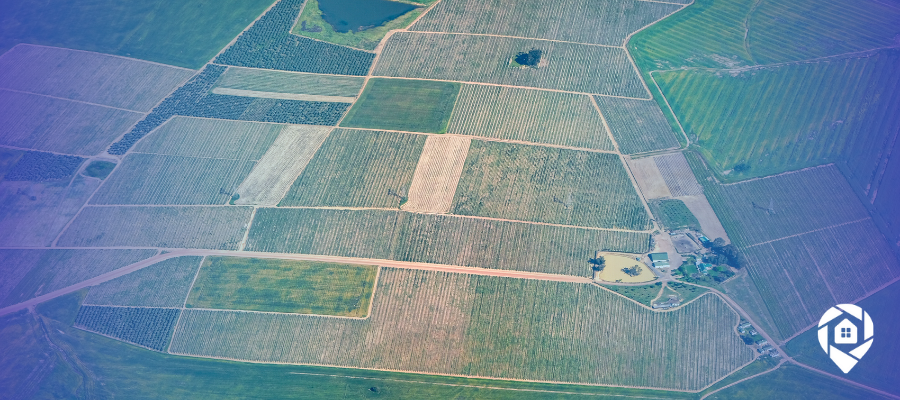
This blog is based on a real interview with Clayton from the DealMachine Real Estate Investing Podcast, where he breaks down how he built a multi-million-dollar land investing business using simple systems and consistent execution.
Why Is Land Investing Better Than House Flipping?
Land investing is 10–15 times less competitive than house flipping because rural landowners are rarely marketed to, have fewer pricing tools, and are often more motivated to sell. This creates a lower-cost, lower-friction path to consistent profits.
House flippers and wholesalers target the same seller lists:
These sellers are heavily marketed to and get multiple calls, texts, and mailers every week. In contrast, rural landowners often have no idea what their land is worth, and no one is contacting them.
What Makes Rural Land Less Competitive?
Unlike urban homeowners who receive dozens of offers, many rural landowners have never been approached by an investor. With limited access to online comps and fewer active buyers, rural land remains one of the least saturated real estate asset classes.
Advantage of Information Arbitrage
Most rural landowners can’t easily find land comps online. This lack of transparency lets investors who do their homework buy low, price right, and flip land faster, especially in fast-moving counties.
This is the same edge that once made house wholesaling profitable, until competition wiped it out. Now, that edge has shifted to land.
Identifying High-Demand Land Markets
Use Lands of America to find counties where land is selling faster than it’s being listed. If the number of sold properties in the past 12 months is 1.5x or higher than active listings, that’s a strong sell-through rate.
Clayton’s 5-Step Sell-Through Test:
- Pick a state (e.g., Florida, Texas)
- Avoid major metro counties
- Go 1–2 counties outside the big cities
- Filter land listings (e.g., 5–100 acres)
- Compare sold vs. active listings
If 918 sold and 409 listed → 224% sell-through = excellent market
Best Areas to Buy Land
Look just outside major cities, these are known as “honey hole” markets. You want rural counties that are close enough for weekend use but far enough to avoid builder and wholesaler competition.
These areas offer:
- Consistent demand from recreational buyers
- Motivated sellers aged 55–75
- Fewer competing investors
- Better price-to-speed ratios
Clayton recommends avoiding massive counties like Miami-Dade and instead targeting adjacent areas with steady land sales but fewer players.
How Do Land Investing Profits Compare to House Flipping?
Land deals can be just as profitable as house flips, without the overhead. With Clayton’s direct mail system, a 10,000-letter campaign produces:
- ~40 leads
- ~2 deals closed (5% close rate)
- ~$20,000 profit per deal
- ~$5,800 ad spend
- 6.9x ROI within the first 30 days
It’s common to earn $15K–$25K per deal consistently, with low operational drag.
Why Does Direct Mail Work So Well for Land?
The seller demographic (ages 55–75) responds well to physical mail. These owners often prefer tangible, clear messages over cold calls or texts.
Direct mail benefits:
- High response rate
- Longer shelf life
- Simpler compliance
- Better fit for landowners unfamiliar with tech
It also allows you to scale with a monthly, fixed budget, building a predictable deal pipeline.
The Biggest Mistake Land Investors Make
Inconsistency. Most failed investors send one big campaign, get discouraged, and stop. The ones who win treat it like investing: send mail every month, track results, and stay the course.
“Don’t send 15,000 pieces in month one, then drop to 2,000 when it gets quiet,” Clayton warns. “Set a monthly budget and stick with it like you would with dollar-cost averaging.”
Focus on One Marketing Channel
Spreading yourself across texting, cold calling, PPC, and direct mail too early dilutes results. Clayton’s rule is:
“Focus on one channel until it makes a million. Then add another.”
For land, that one channel is usually direct mail, because it matches the seller profile and can scale predictably.
How Does Land Investing Scale Better Than House Flipping?
House flipping has more variables:
- Rehab delays
- Contractor issues
- Permits and inspections
- Market volatility
- Financing problems
Land deals:
- Have no repairs
- Use public data for underwriting
- Close fast
- Are easy to outsource
Clayton calls it a “conveyor belt of cash”, you feed the system with consistent marketing and get predictable results.
FAQs About Land Investing
Is land investing better than house flipping in 2026?
Yes. Land investing offers lower competition, fewer moving parts, and faster scaling than traditional house flipping.
How much money can you make flipping land?
Many investors average $15,000–$25,000 per deal. With consistent marketing, monthly profits can reach six figures.
Where is the best place to invest in rural land?
Look one to two counties outside major metros in high-activity states like Florida, Texas, and the Southeast.
Do I need a lot of money to start land investing?
No. Many investors start with $3K–$6K/month in direct mail, reinvesting profits to grow.
What’s the biggest mistake new land investors make?
Inconsistency. Most quit too early or spread themselves too thin. The winners commit to one strategy and track their numbers.
Final Takeaway
Land investing is a powerful, scalable, and overlooked strategy in today’s real estate landscape. By focusing on:
- Low-competition rural markets
- Consistent outreach
- Clear pricing strategies
- Repeatable systems
…you can build a 7-figure business with fewer hours, lower risk, and stronger margins than traditional house flipping.
For investors looking for a leaner, data-driven model, rural land investing may be the smartest move you make this year.