•


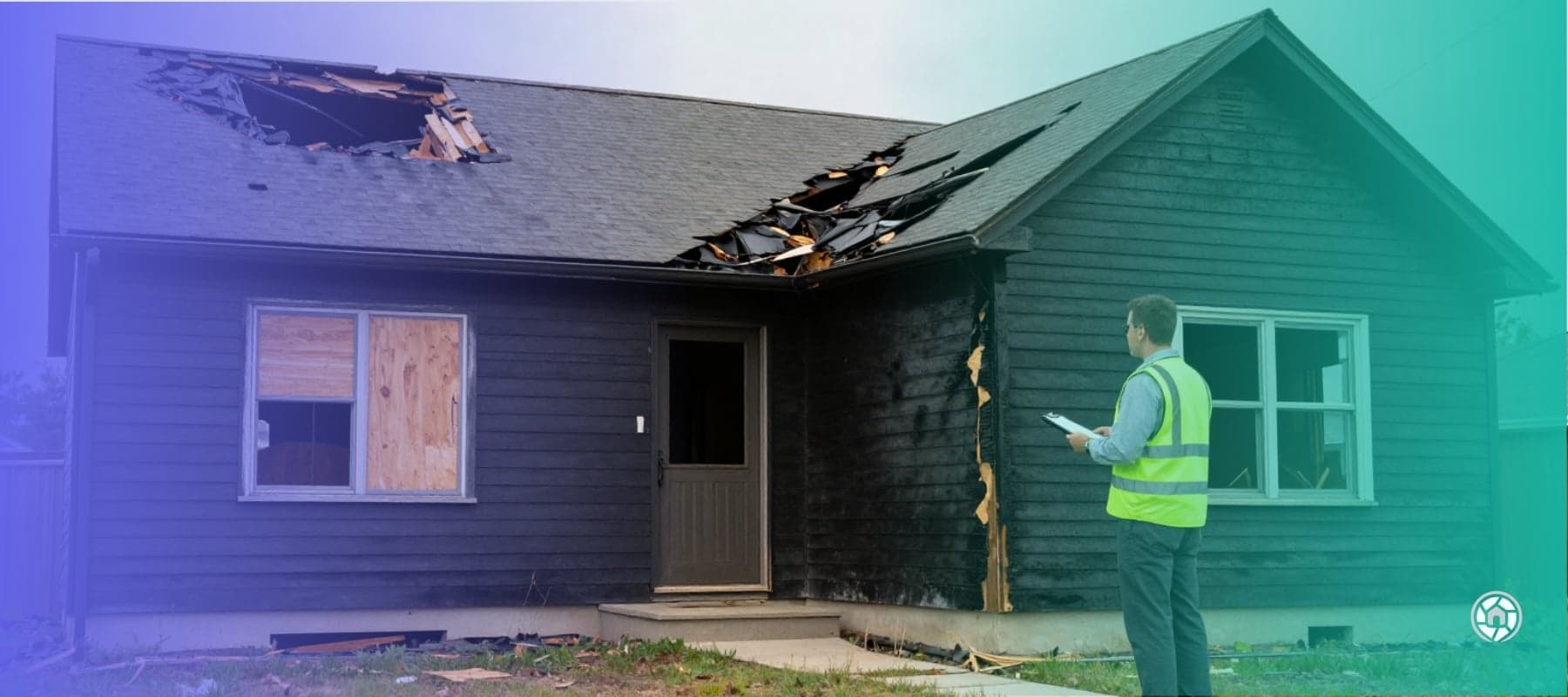

Fire Damage House Deals: What to Check Before You Buy
Most articles about fire damage are written for the homeowner who just lost a house. This one is for the buyer on the other side of that sale. If you're an investor looking at a burned property, the decision comes down to four checks: how deep the damage goes, whether you can insure it, what the building department will require, and how you'll pay for it.
The sections below walk through each one in order, so you can build an offer from real numbers instead of a guess.
Start With the Damage Tier
What matters most is whether the house needs cleaning or rebuilding, because the cost difference between the two is roughly tenfold.
Smoke and soot cleanup typically runs $4 to $7 per square foot, based on 2026 cost data from Angi and HomeGuide. Once framing, trusses, or subfloor need replacing, costs climb quickly, and a full rebuild can run $180 to $450 per square foot, which is more than building new because you're also paying for demolition and debris removal.
| Damage Tier | What You'll See | Est. Cost (2,000 sq ft) | Best Fit |
|---|---|---|---|
| Smoke and soot only | Odor, surface soot, dirty ductwork, no structural damage | $8,000 to $14,000 | Most investors |
| Partial structural | Charred framing in one area, damaged wiring, water from firefighting | $25,000 to $60,000+ | Investors with an engineer's report |
| Heavy structural | Multiple rooms, roof or trusses replaced, full rewire needed | $75,000 to $180,000 | Experienced rehabbers |
| Total loss | Structure can't be saved | $6,000 to $25,000 to demolish, then rebuild | Value it as land only |
Keep in mind that water damage from fighting the fire is a separate cost, often $5,000 to $15,000, and mold can start within 24 to 48 hours. If you'd like a clear method for building your repair scope, our walkthrough on calculating repair costs covers it step by step.
Check Insurance Before You Make an Offer
This is the step most buyers skip, and it's often the most expensive one to get wrong.
Insurers share claim history through a database called CLUE (Comprehensive Loss Underwriting Exchange). It holds seven years of claims, and that history stays with the address, not the owner. What this means is that the seller's fire claim can raise your premium as if you had filed it yourself. One fire claim raises premiums by about 29% on average, and some carriers will decline the address entirely.
Only the current owner can pull a CLUE report, so the way to see it is to make it a contingency in your purchase agreement. From there, get a written insurance quote on the specific address before closing. If standard carriers say no, a state FAIR plan or a surplus lines carrier can usually provide coverage, though at a higher cost.
Also budget for vacant-home coverage while you rehab. It averages about $4,200 per year in 2026, and it belongs in your holding costs.
Know the 50 Percent Rule
FEMA defines "substantial damage" as damage from any cause, including fire, where repairs cost 50% or more of the structure's market value before the damage. Once the building department makes that determination, the entire rebuild has to meet current code.
That can mean upgraded electrical, plumbing, roofing, and windows. The 50% is measured against the building's value alone, not the land, so it's easier to reach than many buyers expect. Before you offer, call the building department and ask whether a determination is already on file.
Choose Financing That Fits the Property
FHA 203(k) loans are often suggested here, but they only work if you plan to live in the home, because HUD's 203(k) program requires owner occupancy. The Limited 203(k) also excludes structural work and caps repairs at $75,000.
For most investors, the realistic options are:
- Cash: the fastest and simplest path.
- Hard money: recent terms run about 10.5% to 11.5% interest, with total loans often capped at 75% of after-repair value (ARV).
- Fannie Mae HomeStyle: doesn't require the home to be livable at closing, which helps on damaged properties.
That 75% of ARV cap is a useful filter. If purchase plus rehab goes above it, the deal probably doesn't work. Our guide to rehab loans explains how lenders release repair funds in draws.
Your Checklist Before You Offer
- Make the CLUE report a contract contingency.
- Get a written insurance quote for the address.
- Pull the fire incident report from the local fire department.
- Check permit history for open or unfinished repair permits.
- Hire a structural engineer ($350 to $900) to confirm the damage tier.
- Test for asbestos, lead (in pre-1978 homes), and mold.
Running the Numbers
Skip the rule-of-thumb discount percentages and work from your actual costs. Start with ARV, then subtract repairs, holding costs, closing and financing costs, and your profit. What's left is your maximum offer.
For example, a $250,000 ARV minus $60,000 in repairs, $8,000 in holding costs, $12,000 in closing and financing, and a $40,000 profit target gives you a maximum offer of $130,000.
Finding Fire Damaged Homes
These properties rarely show up as clean listings, since owners are often working through an insurance claim and may simply want to move on. Public records such as fire incident reports, code violations, and vacant property lists are good places to start, and our guide to finding distressed properties covers those channels in more detail.
In the video below, investor Doug Perez explains how he went from restoring burned houses as a contractor to owning them as rentals. He also covers how he finds properties and approaches owners. For a written example of a similar strategy, here's how one investor turned burned properties into rentals.
Once you've found a property, the next step is reaching the owner. DealMachine's skip tracing tools return current owner contact information from an address, so you can start that conversation directly.
Frequently Asked Questions
Is buying a fire damaged house worth it?
It can be, depending on the damage tier. Smoke and soot jobs have a predictable scope and often make the best deals. Structural damage raises both cost and risk, so get an engineer's report before you make an offer.
How much does it cost to repair a fire damaged house?
Angi puts the national average for fire damage restoration at about $27,500. Cleanup runs $4 to $7 per square foot, while a full rebuild can reach $180 to $450 per square foot. Water damage, mold, and rewiring are usually extra.
Can you insure a house that had a fire?
Usually, but expect to pay more. A fire claim stays tied to the address for seven years and raises premiums about 29% on average. If standard carriers decline, a FAIR plan or surplus lines carrier is the typical fallback.
Can investors use an FHA 203(k) loan on a burned house?
No. The 203(k) program requires the buyer to live in the home as a primary residence. Investors typically use cash, hard money, or a Fannie Mae HomeStyle loan instead.
How do I find out if a house had a fire?
Request the incident report from the responding fire department and check the building department's permit records. Seller disclosure rules vary by state, so pull the records yourself rather than relying on disclosure alone.