



With so much property data available online, it's fair to ask whether driving for dollars still earns a place in your week. The short answer is definitely, but the way it works has changed. In 2026, the drive itself is only one part of a larger system that includes property data, skip tracing, and organized follow-up.
This guide walks through what the strategy costs, what kind of leads it produces, and how a modern workflow makes it more efficient. From here, you'll be able to decide whether it fits your goals and your schedule.
What D4D Looks Like Today
The basic idea hasn't changed. You drive or walk through a neighborhood, look for homes that show signs of neglect, and save those addresses so you can contact the owners. These are often homes that aren't listed for sale, which means you're reaching owners before other buyers know an opportunity exists.
What has changed is everything that happens after you spot a house. Years ago, investors wrote addresses on a notepad, looked up owners at the county office, and mailed letters by hand. Today, a D4D app can do most of that in a few taps. What this allows you to do is:
- Save a property with one tap while the app records your route
- Pull owner names, mortgage details, and estimated equity right away
- Find phone numbers and emails through skip tracing
- Start a mail or text sequence the same day
If you're new to the process, our step-by-step D4D plan covers the basics in more detail.
Why the Strategy Still Works
The main advantage is lead quality. Purchased lists are built from public records, so the same names often reach dozens of other investors at once. When you find a house yourself, you're working with information most of your competition doesn't have yet.
D4D also lets you see things that data can't show. An overgrown yard, a tarp on the roof, or a stack of mail by the door can signal that an owner is overwhelmed. Pairing those visual clues with ownership data, such as high equity or a long time owned, helps you focus on the off-market property leads most likely to turn into deals. If you'd like a refresher on what to look for, this guide on spotting signs of property distress is a helpful starting point.
In this DealMachine video, investor Paul Myers explains why he still treats D4D as his top lead source, including the weekly routine, scorecard, and mail sequence he uses to stay consistent:
What Kind of Leads D4D Produces
Not every house you save will become a deal, and that's expected. The goal is to build a list of owners who are more likely than average to consider an offer. The leads you find on the road tend to fall into a few common groups:
- Vacant homes: Signs include boarded windows, no curtains, disconnected utilities, or a yard that hasn't been touched in months. Owners of vacant homes often carry costs without any income from the property.
- Tired landlords: Rentals with visible deferred maintenance can point to an owner who is ready to step away from managing tenants.
- Inherited properties: Homes that sit unchanged after an owner passes away are common, and heirs may live out of state.
- Owners facing financial strain: Code violation notices, unpaid tax signs, or heavy neglect can signal that an owner needs a faster solution.
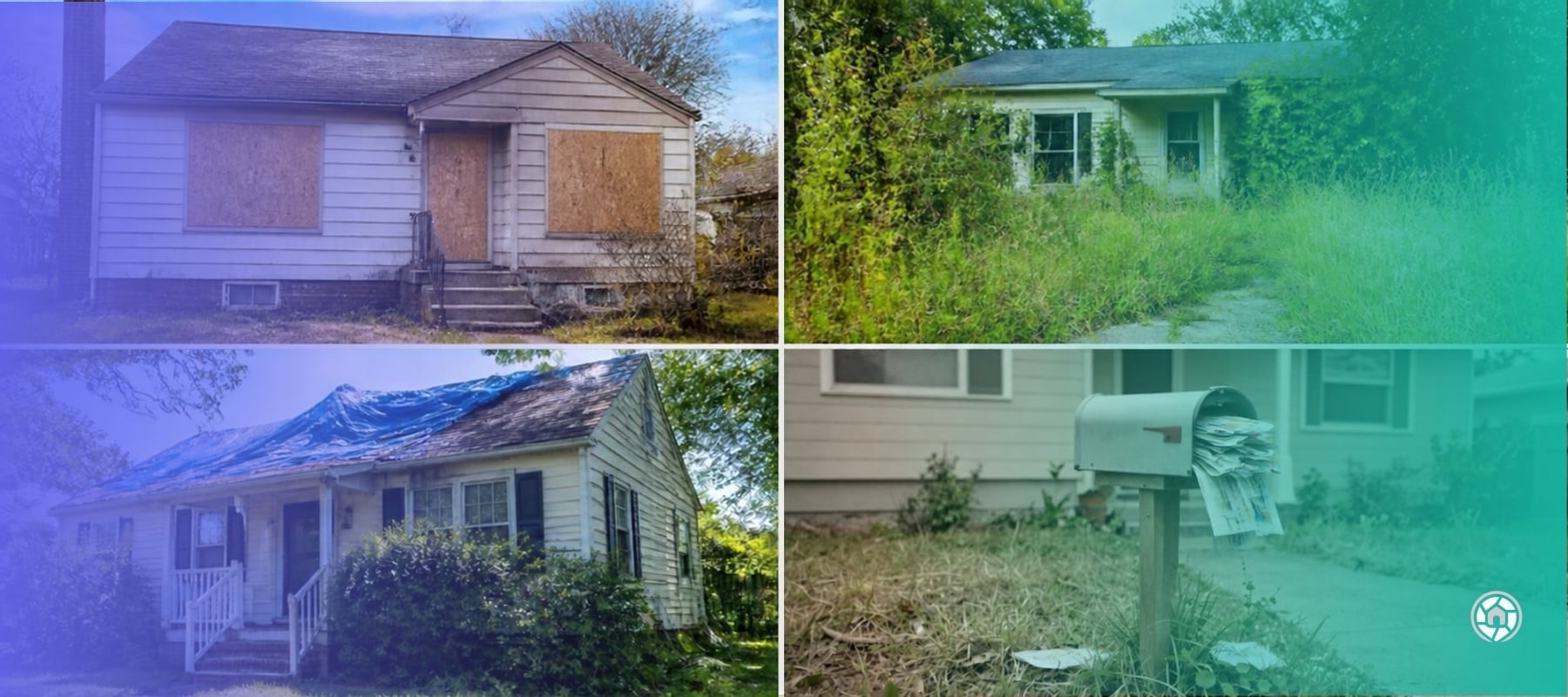
What this means in practice is that D4D gives you context a spreadsheet can't. When you reach out, you already know what the property looks like and why the owner might want to sell. That makes your first conversation more relevant and more respectful of their situation.
What D4D Actually Costs
D4D is often called a "free" strategy, but that isn't quite accurate. The costs are lower than most marketing channels, though they still add up. Here's a realistic breakdown:
- Driving costs: The IRS set its 2026 business mileage rate at 72.5 cents per mile. A two-hour session covering about 40 miles works out to roughly $29 once you include wear on your vehicle.
- Time: Most investors save 30 to 50 properties per hour, depending on the neighborhood.
- Skip tracing: Owner contact data typically costs a few cents to about 25 cents per record.
- Outreach: Postcards usually run under a dollar each, and most deals take several touches.
- Software: A D4D app is a monthly subscription, which also covers your data and outreach tools.
Here's how that might look over one month. Say you drive two hours every Saturday, covering about 40 miles each time. That's four sessions, roughly 160 miles, and about $116 in vehicle costs at the IRS rate. At 40 properties per hour, you'd save around 320 homes. If you skip trace the 150 strongest leads at 15 cents each, that adds about $23. Sending two postcards to each of those 150 owners at 75 cents apiece adds another $225. Before software, your month comes to roughly $360 and eight hours behind the wheel.
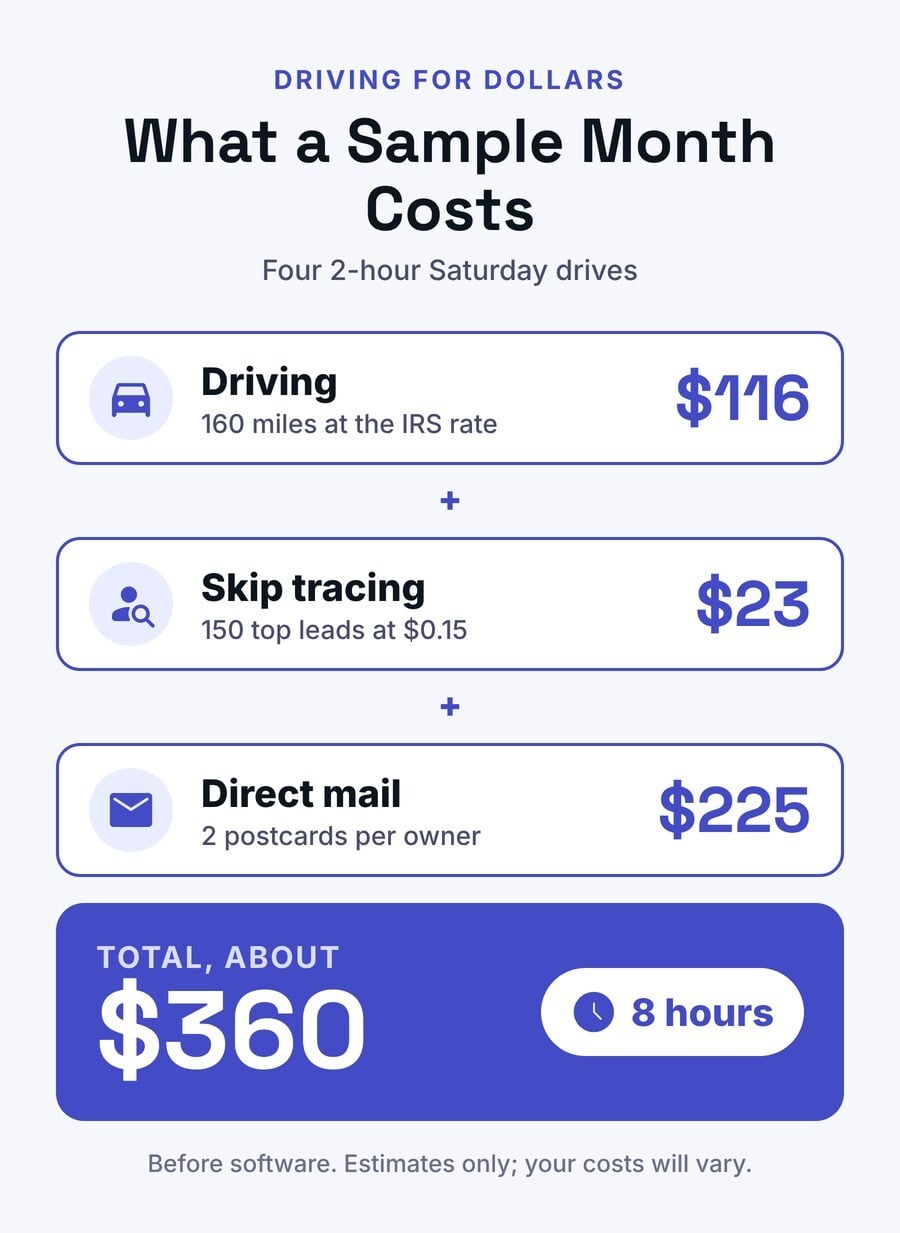
The biggest cost is usually time, not money. This is why consistency matters more than any single drive. If you'd like to get more return from those hours, this guide on improving your D4D success rate is a good next step.
How D4D Compares to Other Lead Sources
No single lead source is right for everyone. This table gives you a clearer picture of where D4D fits alongside other common options.
| Lead Source | Cash Cost | Time Required | Competition | Best For |
|---|---|---|---|---|
| D4D | Low | High | Low | Investors with more time than budget |
| Virtual D4D | Low | Medium | Low to medium | Out-of-area markets |
| Purchased lists | Medium | Low | High | Reaching large volumes quickly |
| Paid online ads | High | Low | High | Established teams with a marketing budget |
If you can't drive your target market in person, virtual D4D lets you scan neighborhoods using street-level imagery. Just check the image date, since conditions can change.
A Modern D4D Workflow
The investors who get the most out of D4D treat it as a repeatable process rather than an occasional outing. Here's a simple workflow you can follow:
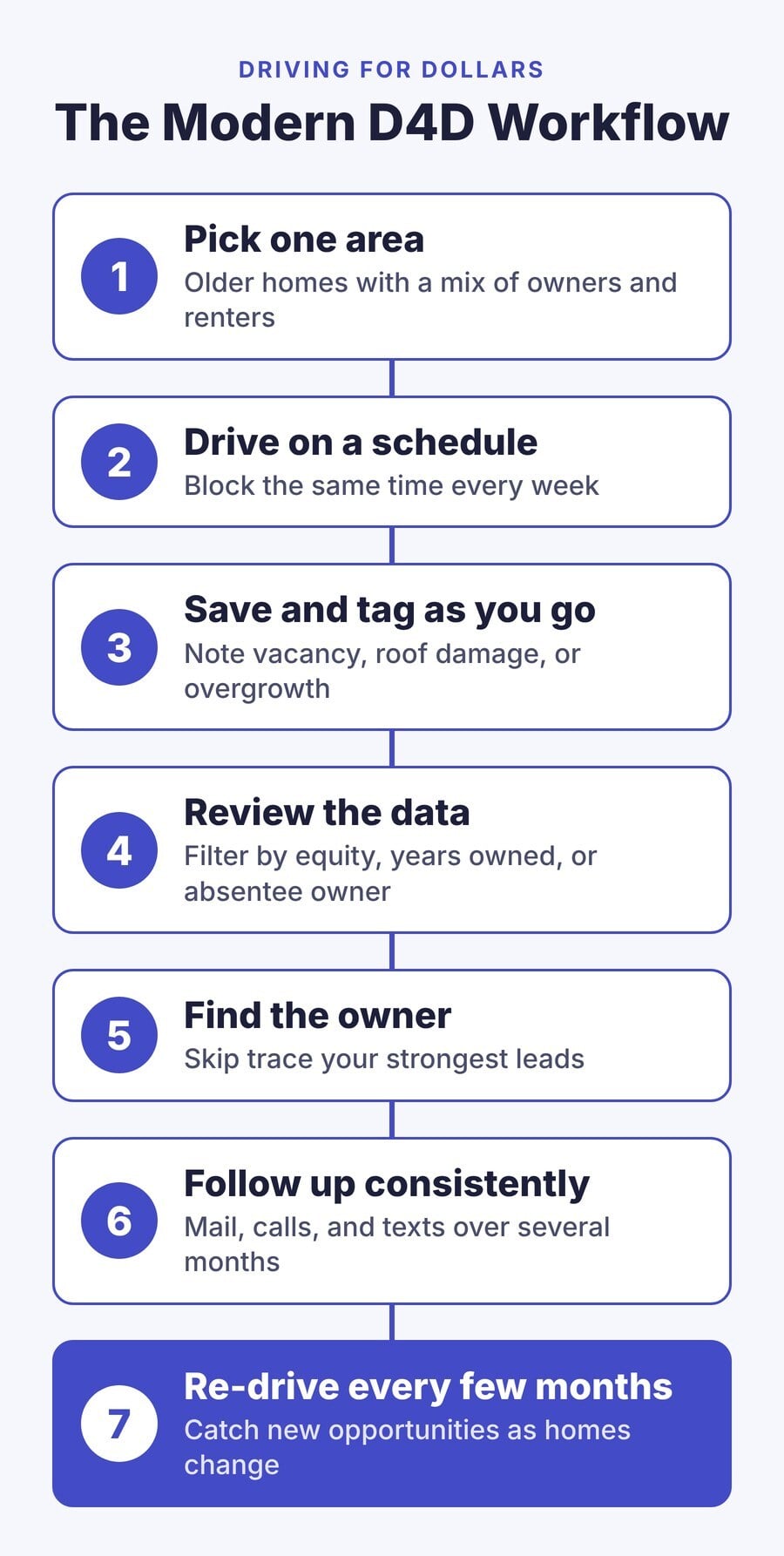
- Pick one area. Choose a neighborhood with older homes and a mix of owner-occupied and rental properties.
- Drive on a schedule. Block the same time each week so it becomes a habit.
- Save and tag as you go. Note what you saw, such as a vacant look or deferred maintenance.
- Review the data at home. Filter your saved homes by equity, ownership length, or absentee status.
- Find the owner. Run skip tracing on your best leads. Our skip tracing guide explains the process.
- Follow up consistently. Most sellers respond after several touches, not the first one.
- Re-drive every few months. Properties change, and new opportunities appear over time.
Once that's set, the drive becomes the easiest part. The follow-up is where most deals are won or lost.
How to Follow Up With D4D Leads
Saving a property is only the first step. Most owners won't respond to your first message, and that's normal. They may be busy, unsure, or not ready to think about selling yet. A steady follow-up plan helps ensure you're the person they remember when they are ready.
A simple sequence many investors use looks like this:
- Week 1: Send a postcard or letter that mentions the property by address.
- Week 2: Call or text the owner, if you have permission to contact them that way.
- Weeks 4 to 6: Send a second mail piece with a slightly different message.
- Every 6 to 8 weeks after that: Continue with light, respectful touches until the owner responds or asks you to stop.
Direct mail is often the backbone of this process, since it reaches owners even when phone numbers are missing or out of date. If you'd like to automate it, DealMachine's built-in direct mail can send a sequence to every property you save, so follow-up happens without extra steps on your end.
When you do reach an owner, keep the conversation simple. Confirm that you're speaking with the owner, explain that you noticed their property, and ask whether they've thought about selling. If they say no, thank them and ask if you can check back later. This respectful approach builds trust and keeps the door open.
Tips for Getting More From Each Drive
A few small habits can make a noticeable difference in your results. None of them require extra spending, just a bit of planning.
- Drive on trash day. Homes without a bin at the curb, or with overflowing bins, can be easier to spot as vacant or neglected.
- Go during daylight hours. Late morning and early afternoon give you the best view of roofs, yards, and windows.
- Bring a partner. One person drives while the other saves properties, which is safer and usually doubles your pace.
- Add notes right away. A quick note like "roof damage" or "mail piling up" helps you personalize your outreach later.
- Track your numbers. Record how many homes you save, contact, and talk to each week. This gives you a clearer picture of what's working.
Pro tip: Drive the same route again a few months later. Homes that looked fine the first time may show new signs of neglect, and owners who weren't ready before may be ready now.
From here, small improvements add up. A slightly better route or a more consistent schedule can lead to more conversations over a few months.
How to Tell If D4D Is Working for You
Answering "is it worth it" for your own business comes down to a few numbers. Tracking them for 90 days gives you a much clearer picture than any general rule.
| Metric | What It Tells You | A Healthy Sign |
|---|---|---|
| Properties saved per hour | Whether your routes are productive | 30 to 50 per hour |
| Contact rate | How many saved owners you can actually reach | Rising as your follow-up improves |
| Conversations per month | The clearest early sign of progress | Steady growth month over month |
| Cost per conversation | Total vehicle, data, and mail costs divided by conversations | Flat or falling over time |
| Deals closed and profit | Whether the time and money are paying off | Profit well above total spending |
Keep in mind that D4D results lag behind the work. A property you save in March may not turn into a conversation until summer. This is why it helps to judge the strategy over several months rather than a few weekends. If your cost per conversation is steady or falling, you're likely on the right track.
When D4D May Not Be the Right Fit
D4D works best when you have time to invest and patience for follow-up. It may not be the right fit in a few situations:
- You need a deal very soon. D4D builds a pipeline over months, so it's not the fastest path to a closing.
- You won't keep up with outreach. A saved list without follow-up rarely produces results.
- Your market has little visible distress. Newer or high-end neighborhoods may have very few distressed properties to find from the street.
- Your time is worth more elsewhere. If you have a larger budget than schedule, a VA or a list-based campaign may be a better use of resources.
In those cases, pairing D4D with other channels can help balance your pipeline. This overview of other ways to find off-market deals can help you choose a mix that fits. If this isn't relevant for you, you can skip ahead.
Key takeaway: D4D is worth it when you can commit to a regular schedule and consistent follow-up. If you can't, it works best as one part of a broader lead plan rather than your only source.
The Bottom Line
D4D is still worth it in 2026, especially for investors and wholesalers who want leads their competition hasn't found yet. The difference today is that the drive is supported by data, skip tracing, and automated follow-up, which makes each hour more productive.
The investors who see the best results tend to share a few habits. They drive the same areas on a regular schedule, they follow up with every owner more than once, and they track their numbers so they know what's working. None of this requires a large budget. It mostly requires a clear plan and the patience to let a pipeline build over several months.
If you'd like to explore this further, DealMachine's D4D app brings route tracking, property data, and outreach together in one place. From here, you can decide what makes sense for you.
Frequently Asked Questions
Does D4D still work for wholesaling?
Yes. Wholesalers rely on finding properties below market value, and D4D surfaces owners who haven't listed yet. That gives you more room to negotiate and fewer competing offers.
Is it legal to drive for dollars and take photos of houses?
In general, viewing and photographing homes from a public street is legal. Don't enter private property without permission, and follow federal and state rules when calling or texting owners.
How many properties should I save per hour?
Most investors save between 30 and 50 properties per hour. Neighborhoods with older homes or more visible distress often produce more.
How long does it take to get a deal from D4D?
Many investors close their first deal within three to six months. Results depend on how many properties you save and how consistently you follow up.
Can I drive for dollars without a car?
Yes. Walking or biking works well in dense neighborhoods, and virtual D4D lets you review properties from home using street-level imagery.