

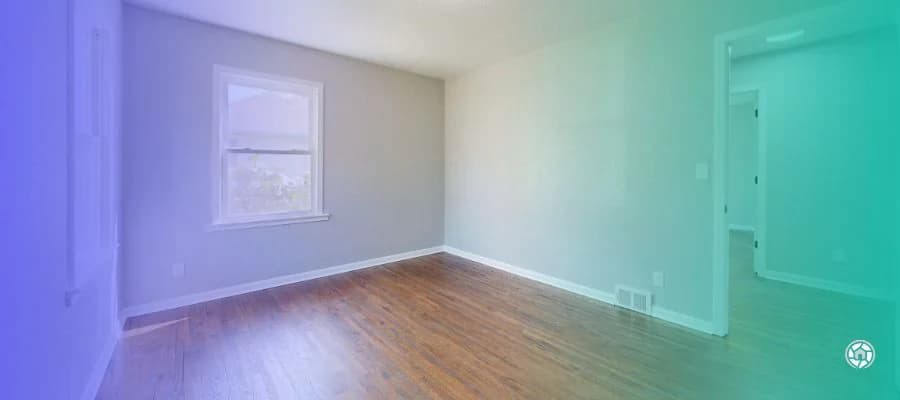

There are over 1.98 million properties across the United States sitting empty right now, according to data we pulled in August 2026. That number is not a survey estimate. It is a count of individual parcels, address by address.
You have probably seen a bigger number in the news. Most articles say roughly 15 million. Both numbers are correct, and the difference between them is the whole point of this post. One of them you can actually work. The other one you cannot.
What Counts as an Empty Property
An empty property is one where nobody currently lives. That sounds obvious, but the definition matters because it decides which houses end up on your list.
DealMachine flags a parcel as vacant using a few signals together:
- USPS mail return flags. Mail sent to the address comes back undelivered.
- Utility status indicators. Service has been shut off or was never turned back on.
- Occupancy records. No current resident is tied to the address in available records.
One signal on its own can be wrong. A snowbird gets mail forwarded for four months, and the house is not really available. Stacking the signals is what makes the flag reliable.
Vacant is also not the same thing as abandoned. A vacant house has an owner who is reachable and who still pays the taxes.
An abandoned house has usually been walked away from, and the title is often a mess. Vacant is the better starting point for most beginners, and it is a much larger pool. If you want the harder version, we cover investing in vacant and abandoned properties separately.
Where the Vacant Homes Are
The table below ranks the top 15 states, pulled in August 2026. Together they hold 1,321,535 properties, or 66.5% of the national total.
| State | Empty Properties | % of National Total |
|---|---|---|
| Florida | 193,574 | 9.7% |
| Texas | 156,778 | 7.9% |
| Ohio | 126,054 | 6.3% |
| Illinois | 119,067 | 6.0% |
| Michigan | 104,506 | 5.3% |
| California | 96,371 | 4.9% |
| New York | 77,815 | 3.9% |
| Pennsylvania | 71,591 | 3.6% |
| Indiana | 65,931 | 3.3% |
| Missouri | 62,887 | 3.2% |
| North Carolina | 56,672 | 2.9% |
| Georgia | 56,327 | 2.8% |
| Alabama | 47,789 | 2.4% |
| Oklahoma | 45,041 | 2.3% |
| Louisiana | 41,132 | 2.1% |
| National Total | 1,986,551 | 100% |
How to Get From 1.9 Million Down to a Callable List
Two million properties is not a list. It is a starting universe. The work is narrowing it.
Here is the order I would use:
- Pick a geography you can service. Start with a county or a set of zip codes, not a state. State-level numbers are useful for deciding where to operate, not for pulling leads.
- Add a second signal. An empty house owned by someone who lives out of state is a much stronger lead than an empty house alone. Layer in absentee owner data and the list shrinks fast.
- Add equity. An owner with deep equity can accept a discounted cash offer and still walk away with money. An owner who is underwater cannot, no matter how motivated they sound.
- Skip trace and start calling. A list you never contact is worth zero.
Three stacked signals in one county will usually leave you a few hundred names. That is a workable month of outreach for one person.
If you want the tactical version of this process, including how to pull and export the list, we walk through vacant property leads by state step by step. And if you are still deciding which signals to prioritize, our list of 23 ways to identify motivated sellers is a good place to start.
Frequently Asked Questions
What counts as a vacant home?
A property where nobody currently lives. In DealMachine, the flag is set using USPS mail return data, utility status indicators, and occupancy records together, rather than any single signal. Census figures use a broader definition that also includes seasonal homes and units already listed for rent or sale.
Which state has the most vacant homes?
Florida, with 193,574 as of August 2026, or 9.7% of the national total of 1,986,551. Texas is second at 156,778, and Ohio is third at 126,054. If you rank by vacancy rate instead of count, Maine comes first at 21.09%, but most of that inventory is seasonal.
What is the difference between a vacant home and an abandoned home?
A vacant house has an active, reachable owner who is usually still paying taxes and insurance. An abandoned house has been walked away from, and it often carries tax liens, code violations, or title problems. Vacant properties are easier to buy. Abandoned ones can be cheaper and much slower to close.
Is it legal to contact the owner of an empty house?
Yes, with rules. Direct mail is broadly permitted. Calls and texts fall under TCPA and Do Not Call regulations, so you need to scrub against the DNC registry and follow consent requirements in your state. Check your local rules before you launch a campaign, and keep records of your compliance.
How do I get a list of empty houses in my zip code?
Filter by geography first, then apply the vacancy filter, then stack a second signal like absentee ownership or high equity. In DealMachine, you can do all of that in one search and export the result with homeowner data attached.

