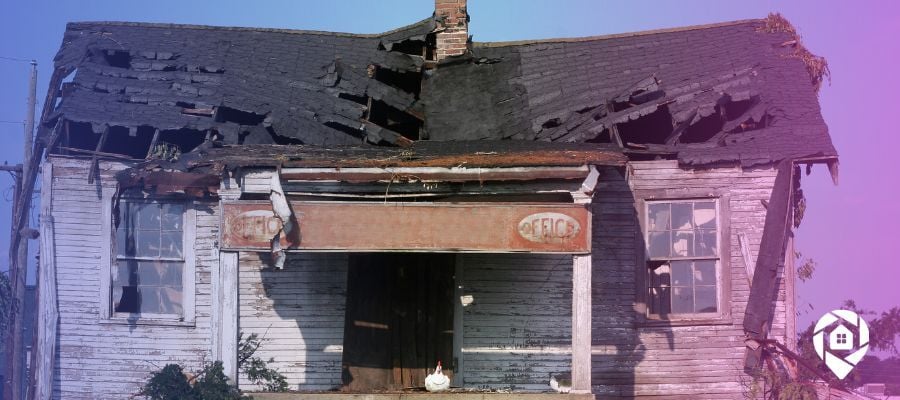
A condemned house can look like a goldmine or a money pit. It all depends on how you approach it. For investors who are just getting started with flipping, these properties raise a fair question: is buying a condemned house actually worth it?
The short answer is that it can be, but only when the numbers make sense. Let's walk through what "condemned" really means, how to evaluate one of these deals, and when it makes more sense to walk away.
What Is a Condemned House?
A condemned house is a property that the local government has declared unfit to live in. This usually happens after a code enforcement officer inspects the home and finds serious health or safety issues.
Common reasons a home gets condemned include structural damage to the foundation, walls, or roof, along with health hazards like mold, lead paint, or asbestos. Fire damage, severe pest infestations, and long-term neglect can also trigger a condemnation.
One thing worth knowing: "condemned" does not always mean "beyond saving." Many condemned properties can be brought back to code with the right repairs. That's exactly where the investment opportunity comes in.
Why Investors Look at Condemned Houses
Condemned houses tend to be priced well below market value. In many cases, they sell for close to the value of the land alone. That low entry point is what makes them attractive to investors.
There's also less competition. Most traditional homebuyers can't purchase a condemned property because standard mortgage lenders won't finance one. That leaves the door open for investors who can move with cash or private funding.
If you can accurately estimate repair costs and the after-repair value, the profit margins on these deals can be strong. Tools like DealMachine's property data platform make it easier to identify distressed properties and start building a list of potential leads in your area.
How to Evaluate a Condemned Property Before You Buy
This is where most deals are won or lost. Evaluating a condemned property takes more homework than a standard flip, but the process is straightforward if you follow a few steps.
Get a professional inspection. You need to know the full scope of what's wrong before you make any offer. Don't skip this. A qualified inspector can flag structural issues, environmental hazards, and code violations that aren't obvious at first glance.
Calculate the After-Repair Value (ARV). Look at comparable properties that have recently sold in the area to estimate what the home would be worth once it's fully renovated. A real estate comps tool can help you pull those numbers quickly. If you want a full walkthrough on this step, our guide on how to calculate ARV in real estate covers it in detail.
Apply the 70% Rule. This is a standard guideline for flippers. It says you should offer no more than 70% of the ARV, minus your estimated repair costs. It's not a perfect formula for every situation, but it gives you a solid starting point for protecting your margin.
Check for liens and unpaid taxes. Condemned properties often come with baggage. Unpaid property taxes, municipal fines, and other liens can add thousands to your total cost. Make sure you know what's attached to the title before you commit. Solid due diligence at this stage can save you from a costly surprise later.
Understand local code requirements. Every municipality has its own rules for lifting a condemnation. Some require permits and inspections at every stage of the rehab. Get familiar with your local process early so there are no surprises down the road.
Your Options When You Find a Condemned House
Not every condemned property needs the same approach. Here's a quick comparison of the three most common paths investors take.
| Option |
Typical Cost Range |
Timeline |
Best For |
Risk Level |
| Repair and Flip |
$30K to $150K+ |
3 to 9 months |
Investors with rehab experience |
Medium to High |
| Demolish and Rebuild |
$100K to $300K+ |
6 to 18 months |
High-value markets where the land justifies it |
High |
| Wholesale the Deal |
Minimal (assignment fee) |
1 to 4 weeks |
Beginners or capital-light investors |
Low |
Repair and flip is the classic play. You buy the property, fix what's broken, and sell it at a profit. This works best when the repair costs are predictable and the ARV supports a healthy margin.
Demolish and rebuild makes sense in markets where the land value is high enough to justify starting from scratch. It's the most capital-intensive route, but it can also produce the biggest returns in the right location.
Wholesaling is a great option if you're newer to investing or don't have the capital for a full rehab. You put the property under contract and assign that contract to another investor for a fee. If you're curious about how that works, this guide on wholesale real estate breaks it down step by step.
When to Walk Away
Not every condemned house is a deal worth chasing. There are a few red flags that should make you pause.
If the property has environmental contamination, foundation failures that can't be reasonably repaired, or if the total investment would exceed 70% of the ARV, it's probably time to move on. Title issues that can't be resolved cleanly are another reason to pass.
The goal isn't to chase every deal. It's to find the right ones. Knowing when to walk away is just as valuable as knowing when to buy.
Getting Started
Buying a condemned house to flip can be a solid investment when you take the time to evaluate the deal properly. The opportunity is real, especially for investors willing to do the work that most people won't.
If you're ready to start finding condemned properties in your area, DealMachine can help you locate distressed homes, pull property data, and reach out to owners. For a deeper dive into the buying process, check out our full guide on how to buy condemned houses as a real estate investor.
You don't have to get this perfect to get started. You just have to get the numbers right.
Frequently Asked Questions